Nathaniel Henry Smith of Washington, Rhea County, Tennessee
The town of Washington (known today as Old Washington), once the seat of Rhea County and home to a handsome brick courthouse, several inns and taverns, a jailhouse and numerous businesses, no longer exists as a town per se. It is still a beautiful area near the Tennessee River, with charming farms and attractive homes – but its decline as a village began a very long time ago when, bypassed by the railroad and further damaged by tornado, fire, and Civil War hostilities, the once-thriving community faded into the historical mist where it now lives.
Going back to the nineteenth century and beyond, it becomes increasingly difficult to trace the activities of one’s ancestors by county. Rhea County was originally carved from larger Roane County – and Meigs County, in turn, was formerly part of Rhea. Early settlers whose land grants and bounties were extensive sometimes had holdings which crossed over into several counties – and thus, in the quest for information regarding the family of Nathaniel Henry Smith, it was necessary to conduct research in several Tennessee counties.
U.S. Census information is always suspect, but Nathaniel Henry Smith was invariably identified – each decade in which he was enumerated – as a native of Tennessee, where he was born in 1822. It now appears that he was one of ten children born to Nathaniel W. Smith and Martha Smith, the latter being a cousin. Although Nathaniel W. Smith was a resident of Rhea County at one point, he had hundreds of acres of farmland – some along the Tennessee River, where his son and namesake later resided – but he is usually more closely identified with McMinn County and with Athens in historical records.
General Nathaniel W. Smith was said to have been born in McMinn County in 1791, and to have wed a cousin, Martha, on March 17, 1817, in Franklin, Tennessee. In the war of 1812, as a young First Lieutenant, Smith fought alongside Second Lieutenant Sam Houston in the Battle of Horseshoe Bend. It has been said that they became lifelong friends. He later fought in the Seminole War with Andrew Jackson. He was a Colonel in the Tennessee Volunteers in 1836 and was discharged as a General the following year.
Nathaniel and his brother, Jackson, were superintendents in charge of overseeing the Cherokee Indian removal in 1837-39, after which he journeyed to the Republic of Texas with his wife and many of their children, including two sons-in-law. According to the research of others, General Nathaniel Smith helped to build Fort Houston and had a wonderful reunion with Sam.
A yellow fever epidemic took the lives of Nathaniel and Martha Smith. Nathaniel’s brother, Stephen Smith, who was living in McMinn County, Tennessee, died childless in 1844 – and made a provision that the children of his late brother be brought back from Texas to Tennessee, to inherit his property as well as to take possession of property left in Tennessee by their father. The children of General Nathaniel W. Smith are identified in these legal documents as:
- Mary Smith
- John Williams Smith
- Martha Maria Smith
- William Pinckney Smith
- Nathaniel Henry Smith
- Samuel Houston Smith
- Emily Jane Smith
- James Coleman Smith
- Laura Chitten Smith
- Amelia Texianna Smith
There is no documentation regarding Nathaniel Henry Smith’s having been in Texas with his father. He was a cabinet maker and skilled carpenter. Could he have been serving an apprenticeship in Tennessee while his family went to Texas? We only know for a certainty that Nathaniel was in Roane County on June 21, 1845, at which time he wed Elizabeth Sarah Willett. There is no other record of his having spent time in Roane County. Family anecdotes suggest that the couple left for Washington, Tennessee, immediately after their marriage. It seems logical that Nathaniel had inherited land near the Tennessee River in Washington, and that is where they settled.
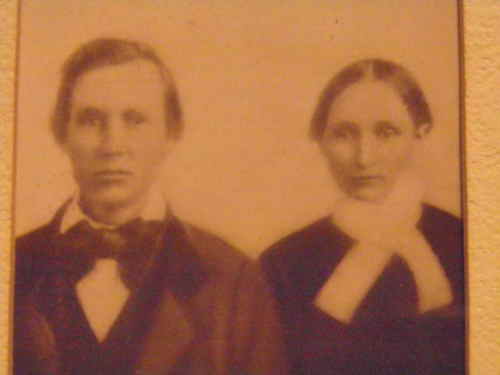 Nathaniel and Elizabeth on their wedding day
Family tradition tells us that Nathaniel and Elizabeth opened an inn near the ferry crossing the Tennessee River, and that he made furniture in one portion of the building and made guests comfortable in the other portion of the inn. They operated a farm as well. The couple’s first child, Eliza Jane Smith (who lived to be nearly 94), was born on September 23, 1846 in Washington. Records indicate that Nathaniel was working on the main road in Washington in 1847, and in July of that year he was named Overseer of Streets of Washington. He was also appointed to serve as a juror for the Circuit Court in 1847.
Just one year after the birth of the first child, Elizabeth brought John Wesley Smith into the world, on September 29, 1847. The previous month, 113 residents of Rhea County voted for Governor, Congressmen, and various state offices. One William Smith cast his vote just shortly after Nathaniel did, but whether this William was his brother has not been determined. We know that younger brother (James) Coleman Smith did live nearby
On March 1, 1851, Henry Smith was born to Elizabeth and Nathaniel. Stephen Foster’s classic song, “The Old Folks at Home,” destined to become the most popular American song of the era, was published that year. Nathaniel had become a Rhea County official by that time. At the March 1852 election held in Washington, he was one of four who certified the election returns – and he came in second to Darius Waterhouse for a Rhea County government position. Not long thereafter, Nathaniel Henry Smith was elected Coroner of Rhea County, posting bond in the amount of $2500, with Darius Waterhouse and R. C. Montgomery as securities.
It was later stated that Nathaniel formally joined the Methodist Episcopal Church South in 1853. His having named first son “John Wesley,” however, suggests an earlier adherence to the Methodist denomination.
Daughter Harriet was born to Nathaniel and Elizabeth in 1854, bringing the total to four small children – but the family was destined to grow in other ways. This interesting item appears in the Rhea County court books (May 1854):
“(It is) ordered that the Sheriff proceed to take and deliver B. G. Bradley, a minor of William Bradley, this day bound by him to N. H. Smith, to the said Smith. On application of William Bradley, ordered by the Court this his son Berryman G. Bradley be apprenticed unto Nathaniel H. Smith until he arrives at the age of 21 years…….Indenture between Nathaniel H. Smith and Orville Paine, Chairman of the County Court. Berryman was 12 years old on 29th September 1853. Smith to teach him the art of farming and give him four sessions of schooling, etc.”
Was B. G. recalcitrant? Why did the sheriff have to take and deliver him to Nathaniel’s farm? Was he well-behaved upon arriving at his new home? The answers to these questions may never be answered, but Nathaniel might have had a bit of extra help with his crops.
In 1856, as Coroner of Rhea County, Nathaniel certified that his friend, Darius Waterhouse, had received 473 votes and was unanimously elected to the office of Circuit Court Clerk. On November 4th of that same year, Nathaniel was the 98th resident to cast his vote for President of the United States – probably supporting Franklin Pierce, the New Hampshire attorney with the beautiful speaking voice who memorized his entire Inaugural Address. Nathaniel and Elizabeth had another blessed event in 1856: daughter Mary Adda (called “Addie”).
Few people voted in the local elections for 1858 offices, but Nathaniel was again elected Coroner of Rhea County. He was paid each time he held an inquest, receiving – as an example – $5.00 for conducting an inquest upon the body of a young female slave. In December of that year, residents of Washington voted for a Justice of the Peace. Nathaniel was the second person to cast a vote that day, and William Smith was the fourth. One wonders whether they were brothers.
1858 brought another child into the growing Smith household: Elizabeth (“Bettie”) was born on April 23 of that year.
In April of 1860, Nathaniel was appointed Juror for the July term of the Circuit Court, alongside his friends William P. Thomison and R. C. Montgomery. At some point, Nathaniel was elected Standard Keeper by the Court for a two-year term. In 1860, his third son, Nathaniel Beauregard Smith, came into the world.
Nat was extremely active in local government, the Methodist Church, his cabinet-making, farming, and the operation of an inn. He and Elizabeth had seven children, with more to come. There was, however, a storm on the horizon…a national storm which was to darken the lives of all the people mentioned in this account. It would hasten the virtual obliteration of Washington, Tennessee, and leave the Smiths of Washington very reluctant to reminisce about the days they would not see again. Neighbors and kin literally turned against one another, generating a bitter climate which would linger for years. Some of the citizens of Washington donned the gray uniform, while others wore the blue. All were to know poverty and deprivation.
Nathaniel Henry Smith enlisted as a Private in Captain Gass’s Company E, also designated Company C, 3rd (also designated 14th) Batallion, Tennessee Cavalry, Confederate States of America – which became Company D, Carter’s 1st Tennessee Cavalry, on August 5, 1861. He was discharged June 20, 1862, by special order of Major General E. Kirby Smith – due to being “over age.” This suggests that he turned 40 in April, 1862. Captain Gass and several others were discharged at the same time, being “over military age.”
Near the end of her life, Elizabeth Willett Smith sought a pension for indigent war widows. At that time, she contacted Nathaniel’s old friend, J. L. Henry, who deposed, in reference to Nat, “..I saw him go off with the Company, and frequently after he enlisted with it. He enlisted in Captain Gass’ Company, First Tennessee Cavalry.” In reference to Nathaniel’s discharge, Henry wrote that his old friend was “discharged on account of being over forty-five years of age, by Confederate government. I was well and intimately acquainted with him. I belonged to the same Company. I have heard him and others talk about it – and I am almost sure that I have seen his discharge.”
A strange footnote to the story of Nat’s service in the Civil War is the organization of his friend Captain Darius Waterhouse’s Company in August 1863. In the Company were several of Nat’s friends, including William P. Thomison. N. H. Smith is listed as 3rd Corporal. Could Dr. Waterhouse (a Washington physician and farmer), Thomison, and the others have had two friends in Washington, Tennessee, named N. H. Smith? Why is this service not mentioned in his widow’s pension application? Half the Company was over 40 years of age, and they organized themselves to serve for six months. If Nathaniel was discharged the previous year, due to being “over-age,” it does seem odd that he would later join Dr. Waterhouse’s Company, to go back into battle – although several others did. Why did Elizabeth and J. L. Henry omit the Waterhouse Company from their account of Nat’s war service?
Elizabeth Willett Smith’s obituary, many years later, states that “when war was declared between the North and South, she cared for the farm while her husband went forth to battle for the South’s cause, even raising the cotton and carding it and spinning it into cloth, that her children might have good clothing.”
At this juncture, it might be appropriate to discuss the account of Nathaniel’s war experiences vividly described by his grandson, Paul Jordan Smith, in his autobiography, The Road I Came (Caxton, 1960). Paul Fort Jordan Smith (1885-1971) never knew his grandfather. Paul’s father, Rev. John Wesley Smith, did not enjoy reminiscing and only passed along a few stories near the end of his life. Paul did know his grandmother, Elizabeth, but young people seldom conduct interviews aimed at ferreting out genealogical information. Thus, in preparing material for his autobiography, Paul – an author, brilliant lecturer, and long-time Literary Editor for the Los Angeles Times – apparently prevailed upon an acquaintance to do some hastily-conceived Smith genealogy, which only succeeded in confusing his grandfather with a different Nathaniel Smith…a Kentuckian who fought in the Mexican War. He mistakenly identified his great-grandparents as a Smith couple who married in New Jersey. These very innocent errors were made at a time when there was no Internet and most family genealogists had to journey in person to the Library of Congress to conduct research. Paul Jordan Smith did go to Virginia in 1958 to reconnect with his maternal roots, but he did not include a trip to Washington, Tennessee, when compiling notes for The Road I Came.
The account of Nathaniel’s activities in the Civil War was nonetheless beautifully written by his grandson, the stark drama inherent in the national tragedy enhanced by his economy of language. “By 1861,” he writes, “the young men of Rhea County were either red-hot Rebel Secessionists or white-hot supporters of the Union. They fairly leapt to arms, not so much to fight far-off Northern Yankees as to get the sanction of war to shoot down their own quarrelsome neighbors.” Nathaniel Henry Smith had neither plantation nor slaves, but he joined the Confederate Army with friends he respected and admired. According to his grandson’s published account, the Union supporters in the Village of Washington, wildly celebrating the fall of Chattanooga, burned down the Smiths’ inn on the Tennessee River, filling eldest son John Wesley Smith’s heart with intense bitterness and an ardent wish to settle accounts at some future date.
Stories told to young Paul by elderly kin in later years recounted starvation inflicted upon the family by hungry Confederate troops who appropriated the Smiths’ livestock, as well as 14-year-old John Wesley Smith’s encounter with a group of Union soldiers, who frightened the boy but did him no harm. The most vivid story included in Paul Jordan Smith’s book, however, describes a horrifying chapter in Nathaniel’s life not verified by surviving documents.
Nathaniel, according to the grandson who never knew him, “never quite recovered from his wound at Murfreesboro and had been keeping up through nerve and pride…” His war record and his widow’s pension application make no mention of Nathaniel’s having been wounded, nor of his having fought at Murfreesboro. He was discharged in 1862, officially because he was “over age.” His grandson writes that “in the spring of 1864, Nathaniel Smith had been given a furlough.” The date seems wrong. If Nat indeed joined Captain Waterhouse’s Company for a 6 month term, between August 1863 and February 1864, he would not have been in the service in the spring of ’64.
The 14-year-old John Wesley Smith never forgot, according to his son’s written account, his own deep disappointment “at the unruffled calm with which his father had listened to the story of the burning of the inn in Washington. He had shown no appropriate anger, John thought. Here they were with only a few pieces of salvaged furniture in a five-room shack, and all because disloyal neighbors had wanted to celebrate a Union victory. He could not understand that his father, as a fighting soldier, had been purged of bitterness. Soldiers forget more easily than civilians.” The boy, who carried a burning resentment against the people and circumstances responsible for the miserableness endured by the struggling Smith family in those never-to-be-forgotten days of civil war, was evidently disillusioned by the abiding calm of Nathaniel Henry Smith.
“….The inevitable company of Union troops came through, searching every house in the district. Elizabeth Smith, informed by a neighbor, had secreted her husband in a small cellar under the kitchen floor. This was reached only by a trap door in the kitchen, and on that door Elizabeth had tacked a square of firm woven carpet, and on the carpet she had placed her rocking chair and therein she sat, rocking her youngest child during the search. The soldiers had been satisfied and were on the point of leaving when old Toby Chisenwell, the lame shoemaker from the town, sang out in a high piping voice to ask whether they had found the trap door in the kitchen cellar. The soldiers turned back, and that was the last of Nathaniel Smith as a man of affairs and a soldier. His family never saw him well again. The wreck of him returned in 1865 to be an invalid until his death in January, 1886.”
The story is splendidly woven – from the heroic act of the brave wife to the treachery of the wretched cobbler, whose actions resemble those of old Carl Hood in the ancient ballad of Earl Brand. Nevertheless, Nathaniel was most assuredly not an invalid for the rest of his life, and he became – if not an opulent man of affairs – at least as active in the community after the war as before. His son’s disillusionment impacted the grandson’s published weaving of the family saga.
During and immediately after the war, the family expanded. Susan Chattin Smith was born in 1862, followed by Martha “Mattie” Minerva Smith on November 16, 1865. The last child of Nathaniel and Elizabeth, Melinda “Linnie” Smith, was born on October 2, 1868, bringing the total to ten.
The terrible period immediately following the Civil War seems not to be well documented in extant Rhea County records, but in 1869, Nathaniel Henry Smith was paid $107 for recovering the Courthouse at Washington.
The 1870 U. S. Census lists 48-year-old Nathaniel as a cabinet workman, and his son John Wesley Smith as a schoolteacher. Some of Nathaniel’s siblings also appear on the 1870 Census, and on the 1875 tax rolls. In 1875, Nathaniel paid taxes on the following pieces of property in Washington, Tennessee: Lots 50, 51, 52, 62, 33, 34, 89, 90 and 2a.
He owned land, he farmed, but he was still a skilled cabinetmaker and carpenter. Many records exist to document his having been paid by the community to make coffins for paupers, such as the widow Leffue, in 1871.
In 1875, Nathaniel Henry Smith was appointed Steward of the Washington Circuit of the Methodist Episcopal Church, South. In 1876, he was elected as a delegate to the district conference, but he requested to be relieved of his duties as Steward when he was elected Coroner of Rhea County in 1876.
Thus, by 1876 Nathaniel was once again Coroner of Rhea County. His son, the Reverend Dr. John Wesley Smith, was a Methodist minister, and his younger son Henry was Constable for the Village of Washington. Nathaniel conducted numerous inquests, for which he was paid per inquest as well as for summoning witnesses. In an 1877 court record, Nathaniel is further identified as jailer…paid $40 for keeping prisoner Abe Sneed from September 21, 1876 to January 1st, 1877. Perhaps Elizabeth prepared meals for the imprisoned Sneed during that period. In February of 1877, Nathaniel was appointed juror for the Circuit Court in Washington, while still serving as Coroner of Rhea County.
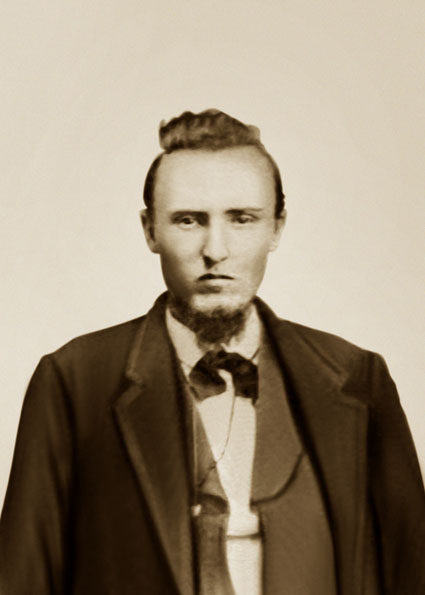 Rev. Dr. John Wesley Smith (1847-1918), son of Nathaniel and Elizabeth
A surviving letter written by Rev. John Wesley Smith to his mother, Elizabeth, while he was a pastor in Chattanooga, sheds light on the family’s circumstances in Washington:
“Chattanooga, May 31, 1877
Mrs. E. S. Smith
Dear Mother:
Yours came to hand and found me well. Glad to hear that you have moved into your new house. Hope you find it a great convenience. Sorry to hear of Henry’s affliction. Hope it is not serious and that he will soon recover.
Glad father is getting along so well with his crop. Hope he will have a thousand bushels of corn to sell. I have been holding myself in readiness to pay for that bill of lumber, but have never heard from it. I think the bill only amounts to about five dollars. What about the painting? Will it ever be done?
I have just got through with paying for my church, and it makes me feel good. I send you a copy of the Daily Times, which gives an account of our Sunday School Picnic. The part referring to me in reading you must omit.
Tell Brother Smith that I am very much obliged to him for his kind invitation and would like very much to come, and will if I can. Enclosed you will find my photograph. That will do for a visit.
Tell Betty and Adda that they may look for their hats. I will try to send them this week and perhaps a few dress patterns – one for (illegible), which you will please send to her as soon as they arrive – and please apologize to her for my not going to see her when I promised. I was disappointed as much or perhaps more than she was.
Send my love to Henry when you write. Nothing new. Write often. Don’t complain about my writing too much. Will do my best. My love to all.
Your son with much love,
- Wesley Smith
- S. Here is some pocket change for you.”
The above tells us that Nathaniel – far from being an invalid – had a bumper crop of corn, while serving as Coroner of Rhea County, and continuing with his cabinetmaking and carpentry.
The reference to “Brother Smith” must mean Washington’s Methodist preacher, Robert E. Smith, who was apparently no relation.
According to the letter, Elizabeth and Nathaniel had a new house in 1877, probably the one on Jefferson Street in Washington – where they were living when the U. S. Census was taken three years later. It would appear that their minister-son, John Wesley, paid for some of the lumber and perhaps for the painting. In his touching postscript, he mentions sending his mother some pocket money. Times were rough in the rural South, but the 29-year-old preacher had gone to Chattanooga and had his own congregation on Whiteside Avenue. There, two years later, would come his finest hour. During the yellow fever epidemic of 1878, John Wesley literally wore himself out tending to his suffering and dying parishioners and providing round-the-clock comfort during a terrifying time. The grateful city presented him with a watch bearing this inscription, “Presented to Rev. J. W. Smith by his friends in Chattanooga, Tennessee, for his fidelity to duty during the Yellow Fever Epidemic, 1878.”
That year in the Village of Washington, Coroner Nathaniel Smith held an inquest “over the dead body of Z. T. Wassom.” He again served as juror for the Circuit Court that summer.
In 1879, skilled carpenter Nathaniel did some work on the jail at Washington, and made coffins for impoverished fellow villagers. In 1880, he was appointed Overseer of Streets in Washington. A few months later, he repaired a case in the County Clerk’s office – and there, in 1881, we find his name in local records for the last time. That same year, the Smiths’ daughter, Harriet, died in nearby Meigs County. They had previously lost daughter Susan.
There is one deed filed at the local courthouse in Nathaniel Smith’s name, the date being December 28, 1881. It should be included in its entirety at this point in our story:
“Know all men by these presents: That we, N. H. Smith and wife Elizabeth Smith of the County of Rhea and State of Tennessee, for the consideration of the love and affection we have for the Methodist Episcopal Church South, have this day and by these presents do give, grant, demise and convey unto N. Q. Allen, S. O. Foust, G. W. Ault, W. G. Allen, and W. A. Ault as trustees and their successors in office, for the use and benefit of the M.E. Church South forever a certain tract or parcel of land situated in the Town of Washington, Rhea County, Tennessee, the same being that fractional part of lot 20 in the plan of the town upon which is situated the church house recently erected by the said M. E. Church South, that part of said lot being by this deed conveyed includes the whole of said lot covered by said Church house and to the street on the front and to the east of said building and to the line of W. L. Nanny’s lot on the south, and three feet out from the center of foundation the entire width and length of said building on the west and north to the street on the east, to have and hold, to the said trustees and their successors in office for the purpose as aforesaid, forever. We covenant that we are lawfully seized and have a good right to convey said parcel of land and that the same is unencumbered. We further covenant and bind ourselves, our heirs and representatives to forever warrant and defend the title to said land against the lawful claims of all persons whatever. Given under my hand on this 28th day of December 1881.
- H. Smith
- S. Smith”
It may be that Nathaniel assisted in the building of the church, after which he and Elizabeth made a formal donation of the land on which it stood. Their son was a respected Methodist preacher, Nathaniel had been – and was to be once more – Steward of the Washington Circuit, and although he possessed no wealth, Nathaniel gave his abilities and his land to the church he held dear.
He was again elected Steward of his church, but his health began to fail at age 63. In a weakened condition, he wrote his Will shortly after the new year of 1886 dawned. It reads as follows:
“Last Will of N. H. Smith
In the name of God, Amen. I, N. H. Smith, being in my right mind and of my own free will and accord, make this my last Will and Testament. My soul and body I commit into the hands of my Redeemer, the Lord Jesus Christ, in hope of the resurrection of the dead and everlasting life after death.
My property, after my just debts are paid, I wish applied as follows. The House and lots in the Town of Washington, Rhea County, Tennessee, with all the buildings belonging thereto, I give to my good wife, Sarah Elizabeth Smith, to hold and keep in her own personal right, or to dispose of as may suit her best –for comfort or convenience, provided she gives a home to my unmarried children. The piece of land bought of W. P. Darwin, lying between the Cotton Post and old Marriot’s road and bounded by the lands owned by the Hoyal, Waterhouse and Locke lands near the town of Washington in Rhea County, Tennessee, I also give to my wife, the said Sarah Elizabeth Smith, to be sold and the interest applied to her maintenance or such other disposal or disposition as she may wish to make of it.
At the death of my wife, if there is any property remaining, I wish it to be equally divided between all of my children – except Phillip Wyrick and family, and Henry T. Smith, who have received their shares.
I appoint J. W. Smith, my son, my Executor, to take charge of everything, make all settlements, and thus carry out this, my last Will and Testament. This 21st of January, 1886.
- H. Smith
Witnesses : John Howard And R. W. Colville”
Four days after signing the above, Nathaniel Henry Smith passed away. H. C. Neal, in an article probably published in a Methodist periodical, had these sentiments to express about his late friend:
“At the time of his death, he was a steward of the Washington circuit. He leaves a wife and several children to mourn their loss. The life and death of Brother Smith is an illustration of the beauty and power of our holy religion. While the infirmities of human nature belonged to him, yet the graces of religion subdued and controlled them. ‘My grace is sufficient for thee’ was very beautifully exemplified in his Christian character. He was very devoted to the church, though in no sense a sectarian. The sentiment of the poet —
I love Thy kingdom, Lord,
The house of thine abode,
The church our blest Redeemer bought
With His own precious blood” —
Was pre-eminently his. His last sickness was protracted and severe. In September, 1885, he had pneumonia, when he was very near death’s door. He did not fully regain his health and, in a very feeble condition, he lingered until the 25th of January, when he calmly, and in great peace, passed away. I saw him frequently during his illness. He loved to talk of his approaching dissolution. Death, to him, had no terror. The death of such a man is a calamity to the church and community. The will of God be done. The blessings of God rest upon his devoted Christian wife and children.
- C. Neal.”
Nathaniel was buried in a Washington cemetery. In later years, his daughters could point to the burial spot – but his grave remains unmarked to this day. His widow remained in the little community for a few years and then sold four remaining lots in Washington for $100 and moved to Chattanooga. With most of the original town buildings destroyed or in disrepair, the community was subsequently re-christened Old Washington, the name it now bears, though there remains no trace of the village Nathaniel Henry Smith knew and no highway sign identifies the place by name.
Daughters Susan and Harriet died before Nathaniel. The youngest son, Nathaniel Beauregard Smith, went to Houston, Texas, where he died in 1894. Was he perhaps seeking to inherit some land left by his grandfather, Nathaniel W. Smith? Why else would he travel from his rural Tennessee home to Houston? The other children lived long lives, with eldest daughter Eliza Jane nearly reaching age 94 before her passing in 1940.
What of the Smith genealogy? The compiler of these notes can claim no credit for the time-consuming work done by others. It would appear that this might be the lineage:
| Richard Smith
1632—1713 Surry, Virginia |
Margaret Mary Blow (Belew)
1655–1690 |
| Nicholas Smith
1659–1719 |
Elizabeth Flood
1650–1719 |
| William Smith
1700—1751 |
Anne Isham
1665–1718 |
| William Isham Smith
1730—1815 |
Hannah Jackson
1744–1823 |
| Henry Smith
1753—1838 Revolutionary War veteran |
Margaret Lyon
1758–1830 |
| Nathaniel W. Smith
1791—1841 War of 1812 and Seminole War veteran |
Martha Smith
1795—1841 |
| Nathaniel Henry Smith
1822—1886 Civil War veteran |
Elizabeth Sarah Willett
1828—1913 |
The ten children born to Elizabeth and Nathaniel have been discussed in this narrative. Their son, the Rev. Dr. John Wesley Smith, was the great-grandfather of the compiler of these notes. The circuit-riding preacher and his wife, Lucy Jordan, had but one son – Paul Fort Jordan Smith, born in Wytheville, Virginia, in 1885. Paul and Ethel S. Park, who met and married in Chattanooga, had three children, including my father.
It is pleasant to drive through what used to be Washington, Tennessee. One cannot help but wonder how virtually every trace of what used to be the focal point of Rhea County could have so completely vanished with the passage of time. How could the brick buildings seemingly disintegrate? What became of the courthouse which Nathaniel re-roofed? How did the Smiths’ beloved church fail to leave a hint that it once thrived in the village by the Tennessee River? Why does no marker on Highway 30 tell motorists that they are entering or leaving Washington, Tennessee? That the community declined as the coming of the railroad caused nearby Dayton to ascend in importance is understandable, but seldom does a town so completely disappear, as if destined to be erased from memory.
My aim has been to explore my Smith origins. In his autobiography, my grandfather – Paul Jordan Smith – wrote: “I shan’t attempt to trace the Smith genealogy, for it would be like sifting the haystack for a cambric needle.” The all-too-common surname does provide enormous challenges to family historians, but the puzzle at last seems to be taking form, as of 2015. With the help of the extremely kindly folk in Rhea and McMinn Counties, we have been able to sketch out some of the activities of Nathaniel Henry Smith and to learn something about the father and grandfather whose names he bore. It is my hope to modify this account of their story as new information is extracted from the archives.
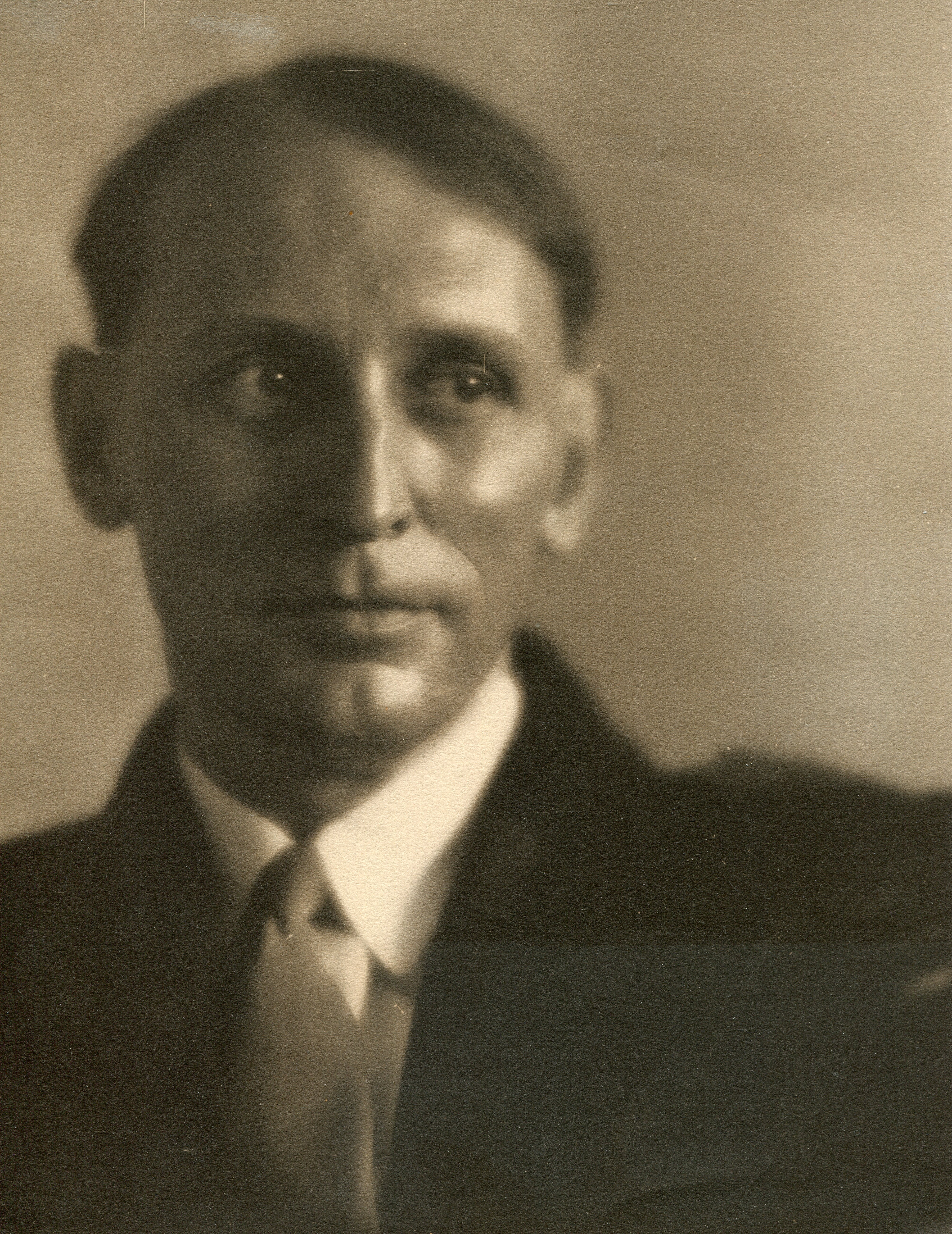 Paul Jordan Smith (1885-1971), grandson of Nathaniel Henry Smith and Elizabeth Sarah Willett
 Nathaniel Henry Smith of Washington, Tennessee